What System Design Interviews Test

A system design interview is not testing whether you can draw a perfect architecture from memory.
It is testing how you think through an unclear problem, make tradeoffs, and explain your decisions.
The big picture
In a coding interview, the problem is usually well defined.
In a system design interview, the problem is often unclear on purpose.
The interviewer might say:
Design a URL shortener.
Or:
Design a news feed.
Or:
Design a ticket booking system.
That is not enough information to build a real system. Your job is to turn a vague prompt into a clear design discussion.
A strong candidate does not jump into drawing boxes immediately. A strong candidate first asks:
- What are the core features?
- What scale are we designing for?
- What latency or availability do we need?
- What data are we storing?
- What tradeoffs matter most?
What interviewers are really looking for
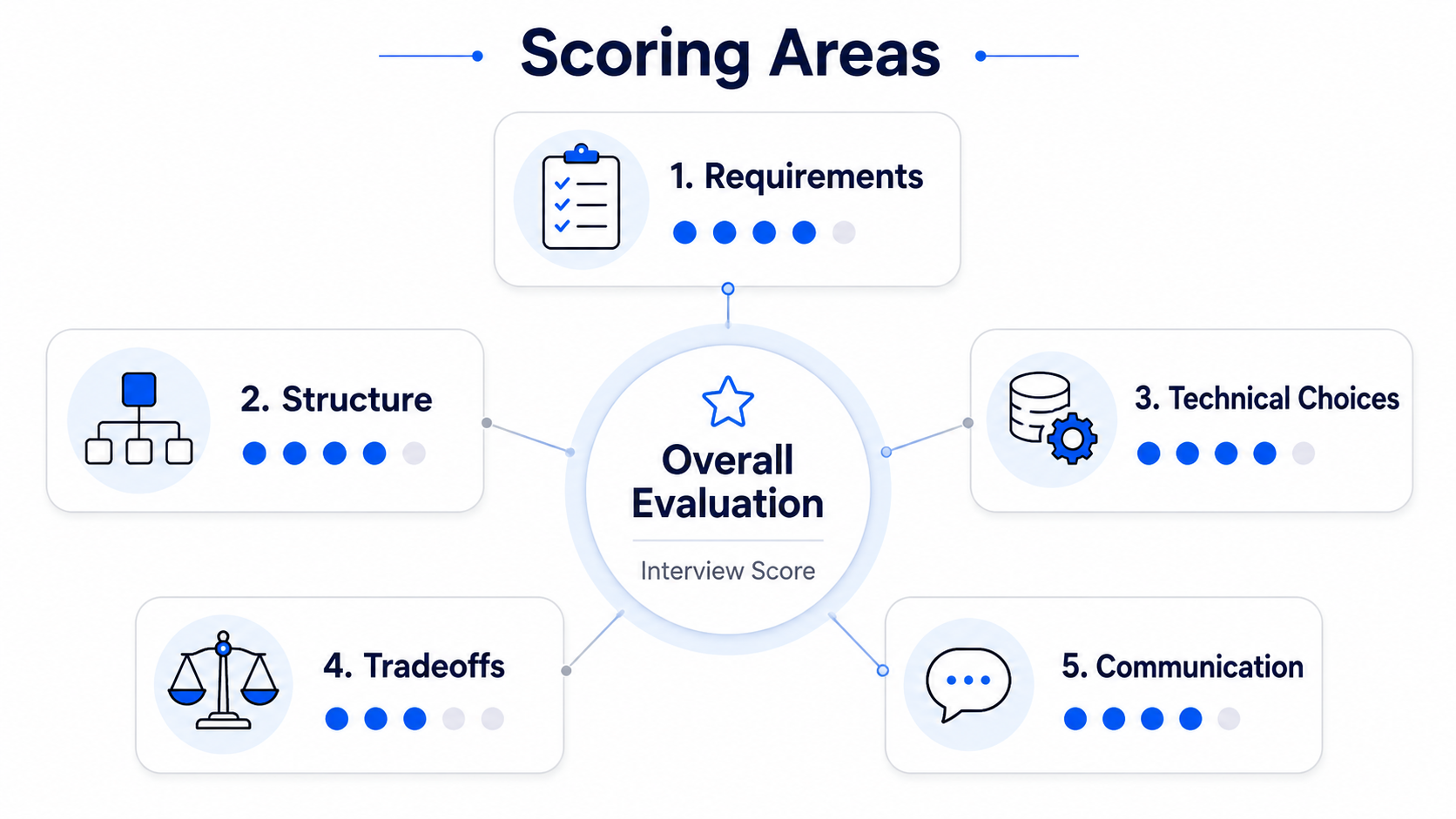
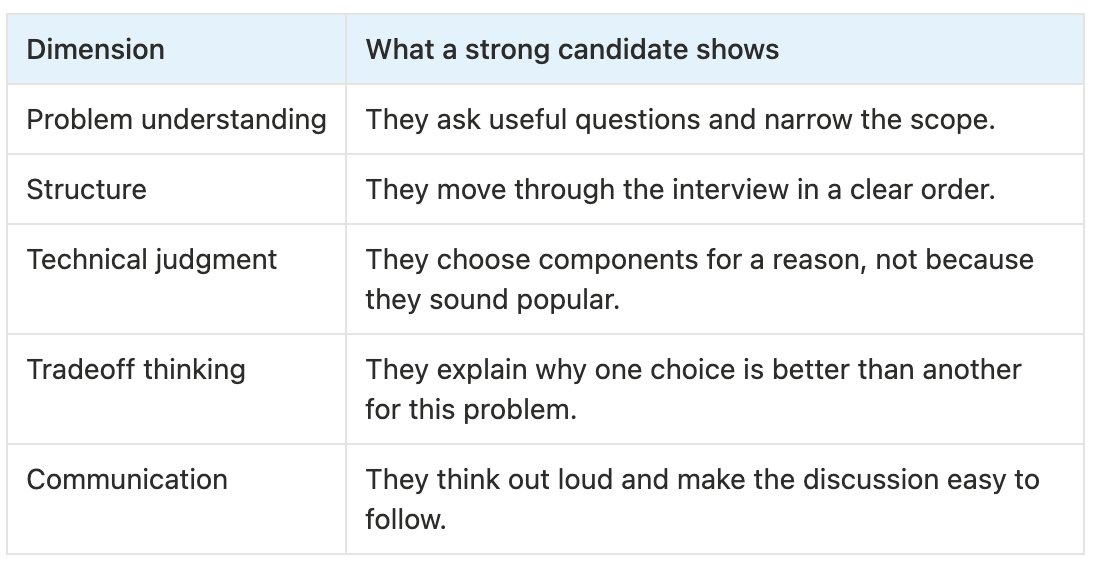
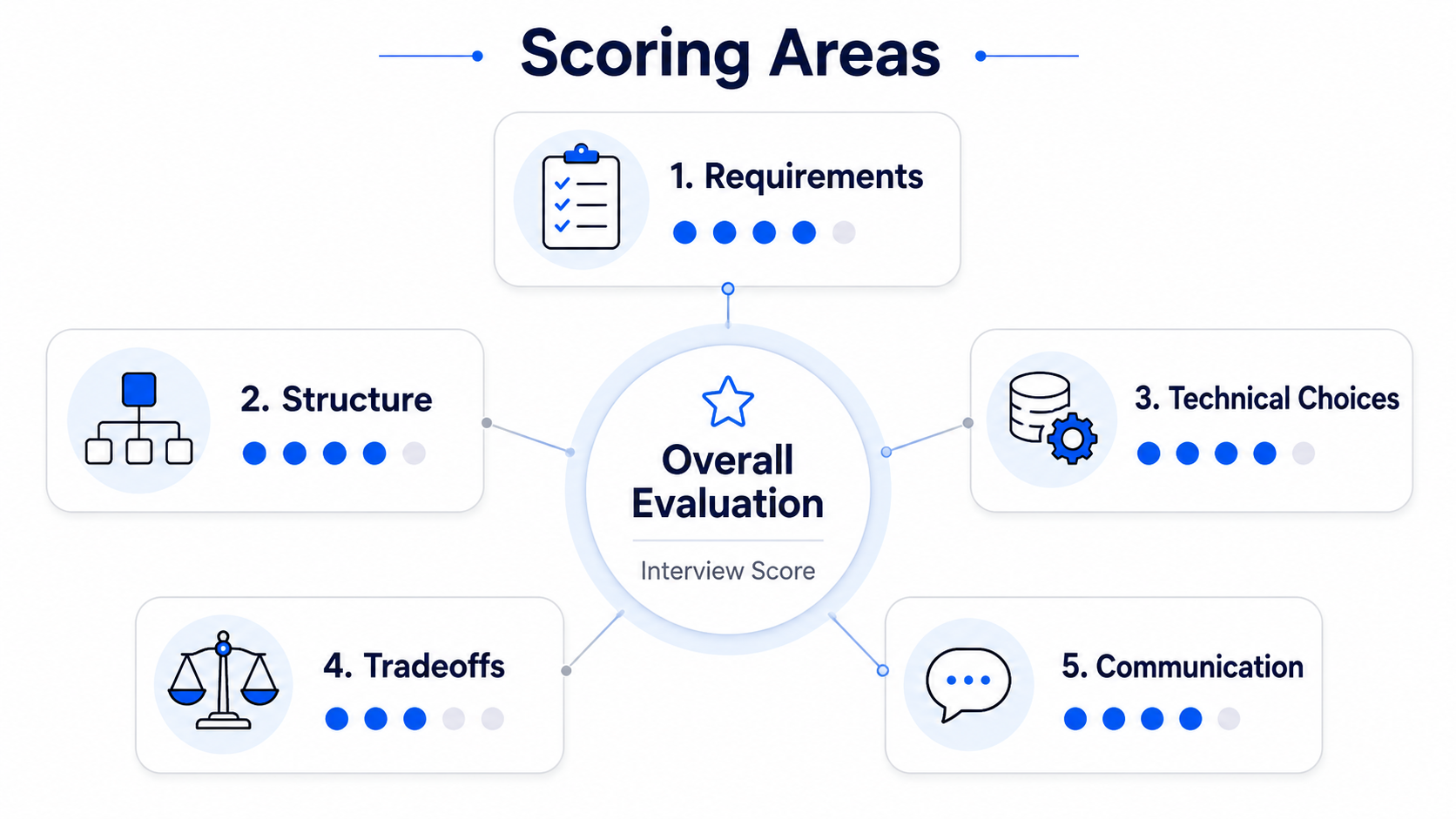
Most system design interviews test five things.
What “good” looks like
A good system design answer usually has this shape:
- Clarify the problem.
- Define functional and non-functional requirements.
- Identify core entities.
- Design simple APIs.
- Draw a simple high-level design.
- Find bottlenecks.
- Deep dive into the most important areas.
- Summarize tradeoffs.
Notice what is not on this list:
- using every technology you know,
- drawing a huge diagram immediately,
- giving a memorized answer,
- or optimizing before the basic system works.
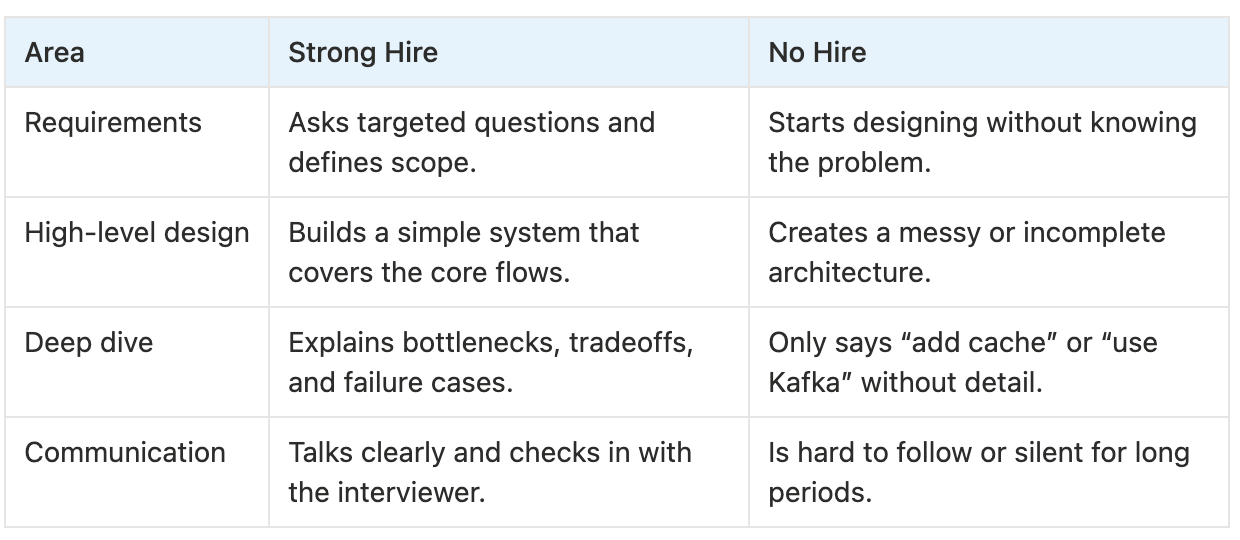
Strong Hire vs No Hire
Here is a simple way to think about the difference.
The role of scale
Scale matters because it changes your design.
A system with 1,000 users can be simple. A system with 100 million users needs different choices.
For example:
- A single database may work at small scale.
- A cache may be needed when reads become very high.
- A message queue may help when work can be done later.
- A CDN may help when static or media content must be served globally.
- Sharding may help when one database cannot hold all the data.
But scale should not be guessed randomly. Ask for numbers when they matter.
Good questions include:
- How many daily active users should we support?
- What is the read-to-write ratio?
- What is the latency target?
- How much data do we store per day?
- Is strong consistency required?
The role of tradeoffs
There is rarely one perfect answer in system design.
Most choices are tradeoffs.
For example:
- Cache improves latency, but may introduce stale data.
- Async processing improves user experience, but adds complexity.
- Strong consistency is safer, but may reduce availability or increase latency.
- Sharding improves storage capacity, but makes queries and operations harder.
The interviewer wants to know if you understand these tradeoffs.
A strong phrase is:
I would choose this approach because..., and the tradeoff is...
Final takeaway
System design interviews are not about sounding smart.
They are about being clear.
If you can show structured thinking, reasonable design choices, and honest tradeoff analysis, you are already ahead of many candidates.