System Design Interview Cheat Sheet

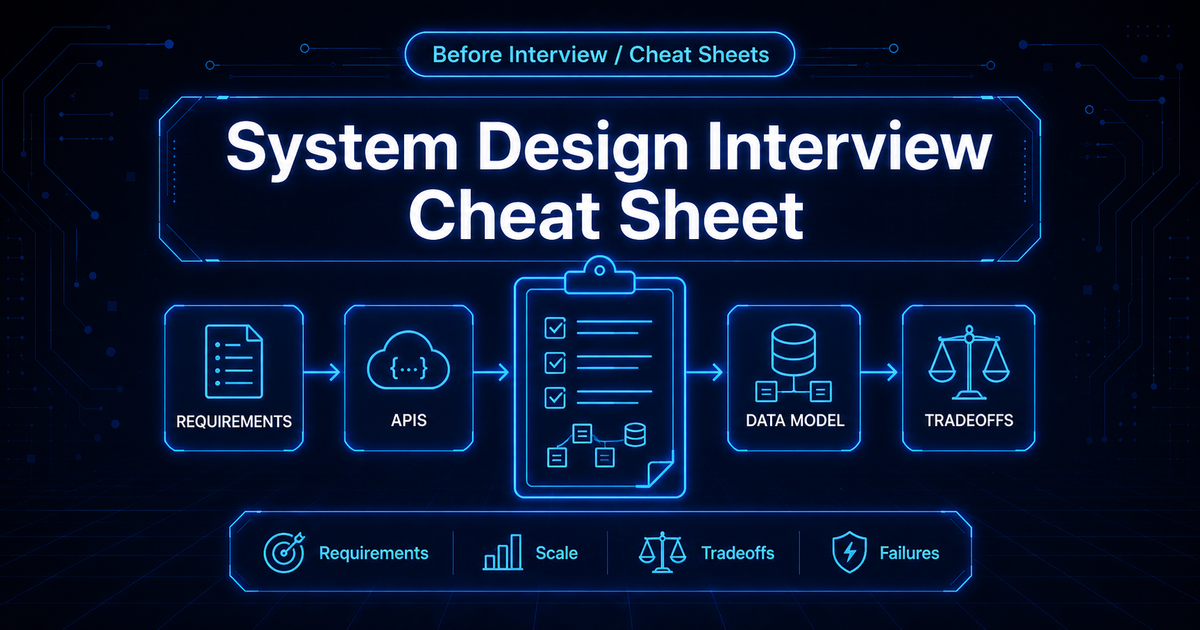
This is the short version of system design interview prep.
Use it before a mock interview, before a real interview, or anytime you need to reset your structure quickly.
The basic interview flow
Most system design interviews can follow this structure:
Requirements → APIs / Data Model → High-Level Design → Deep Dives → Wrap-up
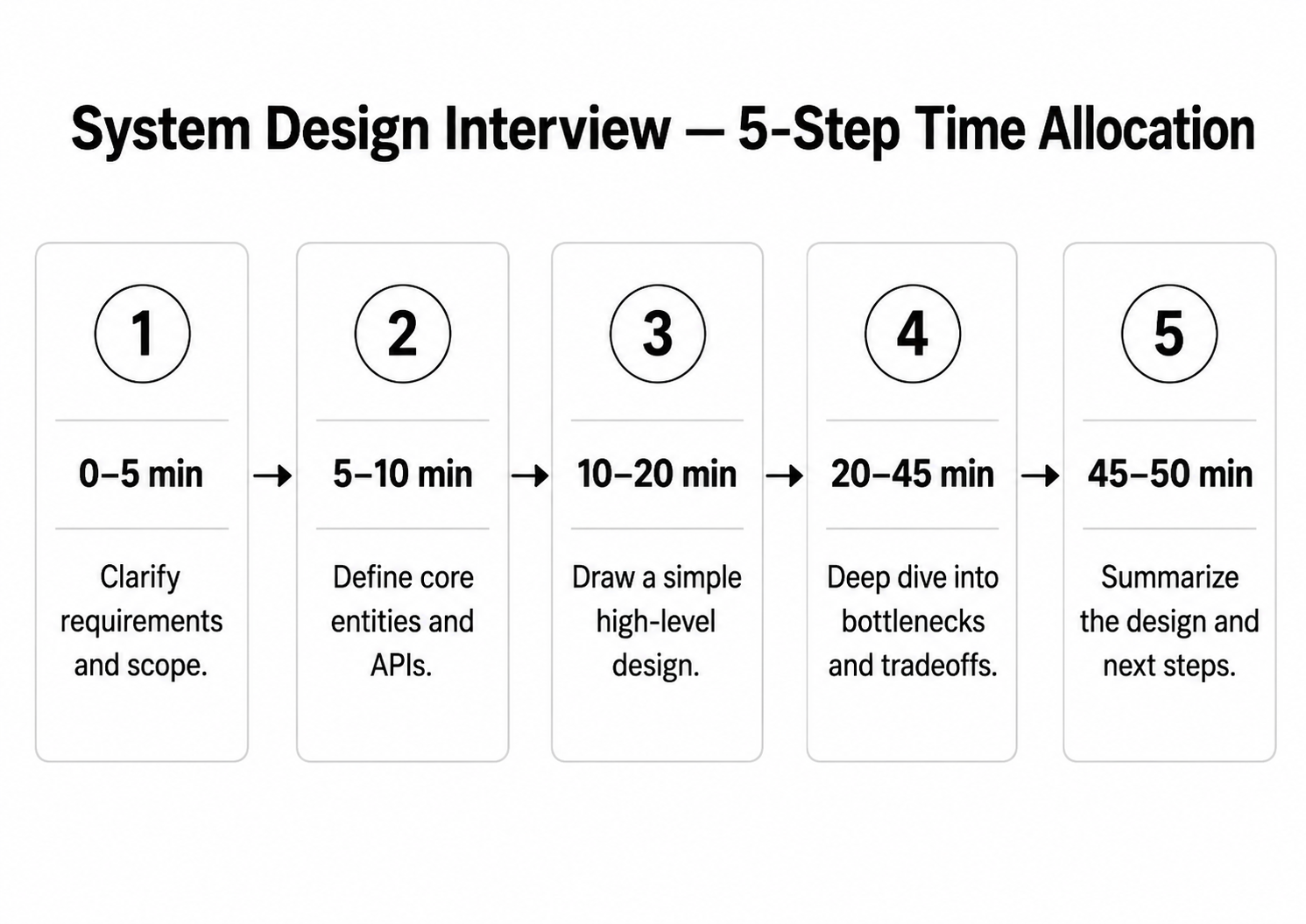
A simple time split for a 50-minute interview:
Requirement checklist
Ask a few useful questions. Do not ask too many.
Good questions:
- What are the core features?
- Who are the users?
- What scale should we support?
- What is the latency target?
- Is strong consistency required?
- Can some data be eventually consistent?
- Are there features we should ignore for now?
A good phrase:
I’ll focus on the core flow first, then we can go deeper into scale and reliability.
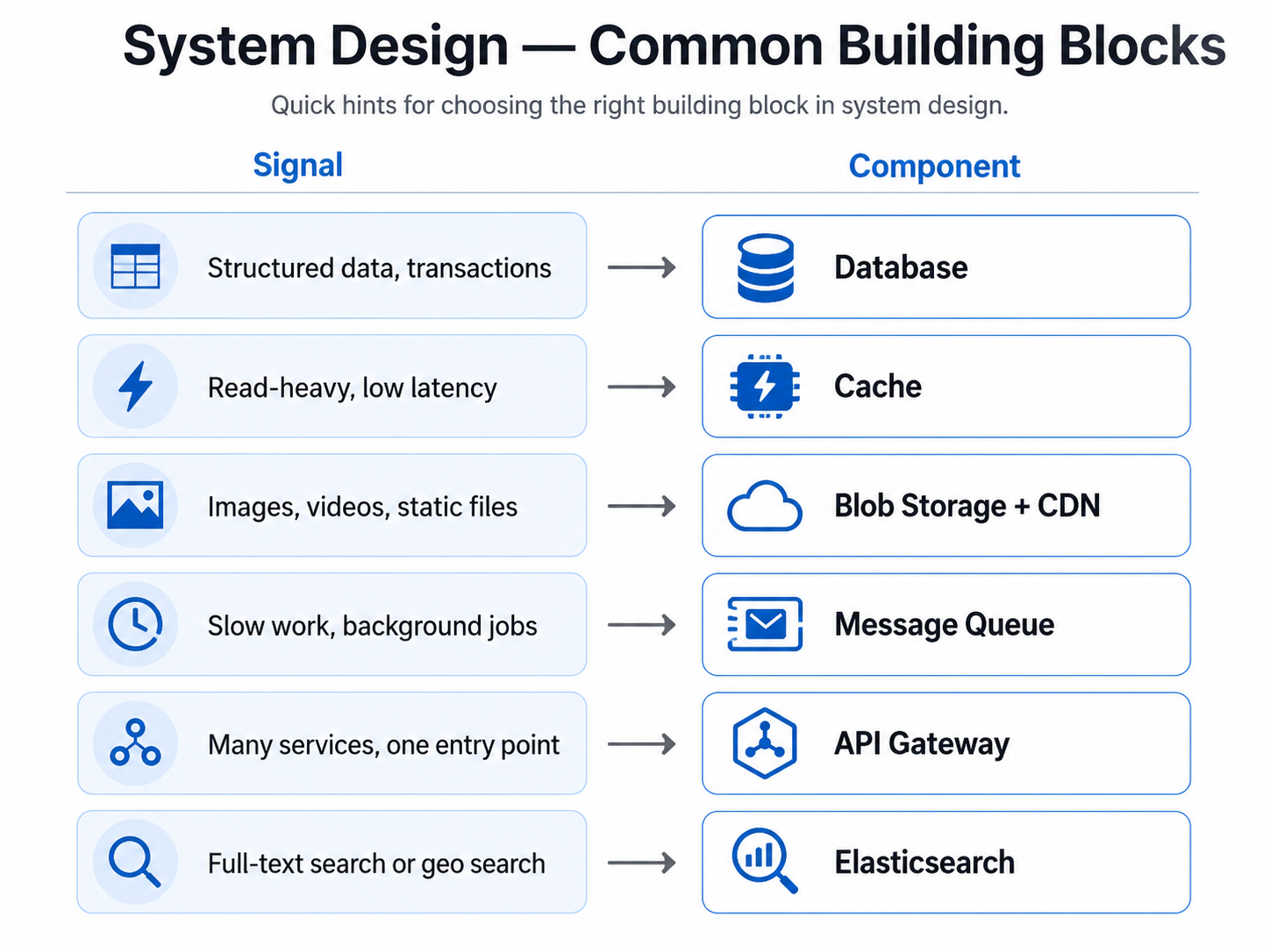
Common building blocks
Deep dive checklist
When the simple design works, ask:
- What breaks at scale?
- Where is the bottleneck?
- What data is hot?
- What can be cached?
- What can be async?
- What needs strong consistency?
- What can fail?
- What should we monitor?
Use this format:
Problem → Option A → Option B → Tradeoff → My choice
Common tradeoffs
- Cache improves latency, but can cause stale data.
- Message queue improves reliability, but adds eventual consistency.
- Sharding increases capacity, but makes queries harder.
- Strong consistency is safer, but may reduce availability or increase latency.
- CDN improves global performance, but makes invalidation harder.
- Distributed locks can prevent conflicts, but add complexity.
Final takeaway
In an interview, clear structure beats random depth.
A strong candidate does not just name components. A strong candidate explains:
- why the component is needed,
- what problem it solves,
- what tradeoff it introduces,
- and how it fits into the full system.