How to Use This Guide

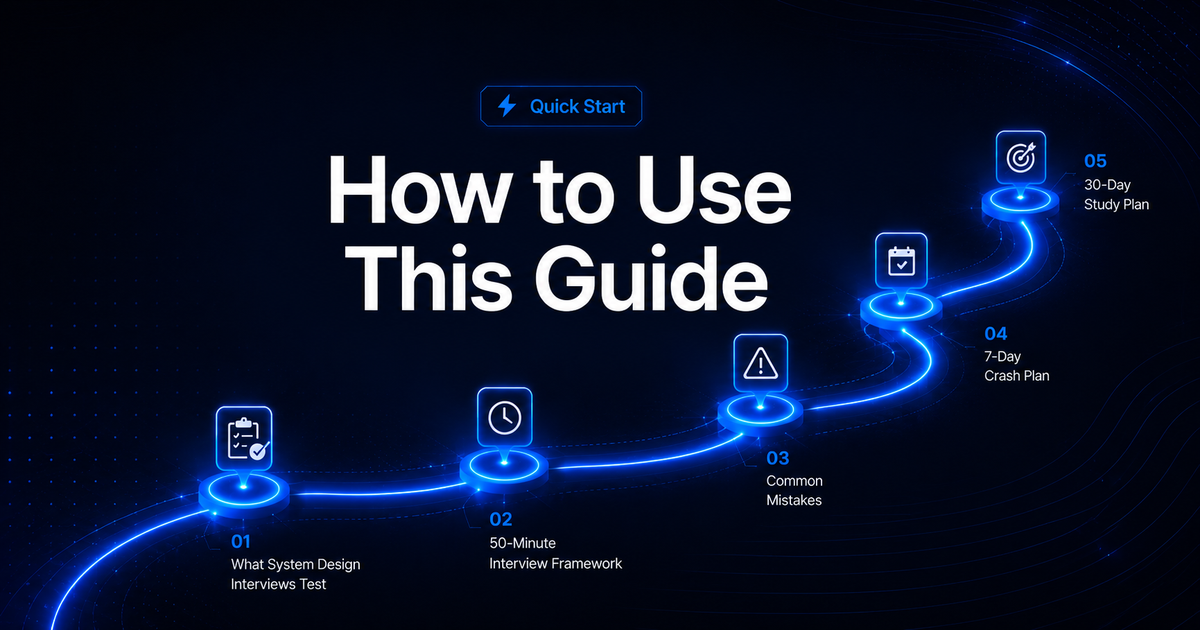
Who this guide is for
This guide is for software engineers who want a simple, clear way to prepare for system design interviews.
It is especially useful if you feel one of these is true:
- You have read system design materials, but still do not know how to speak in an interview.
- You know components like cache, database, and message queue, but do not know when to use them.
- You can understand a finished design, but cannot create one from scratch.
- You get stuck when the interviewer asks follow-up questions.
- You need to prepare quickly for interviews in the next few days or weeks.
The goal is not to make you sound fancy. The goal is to help you sound clear, structured, and practical.
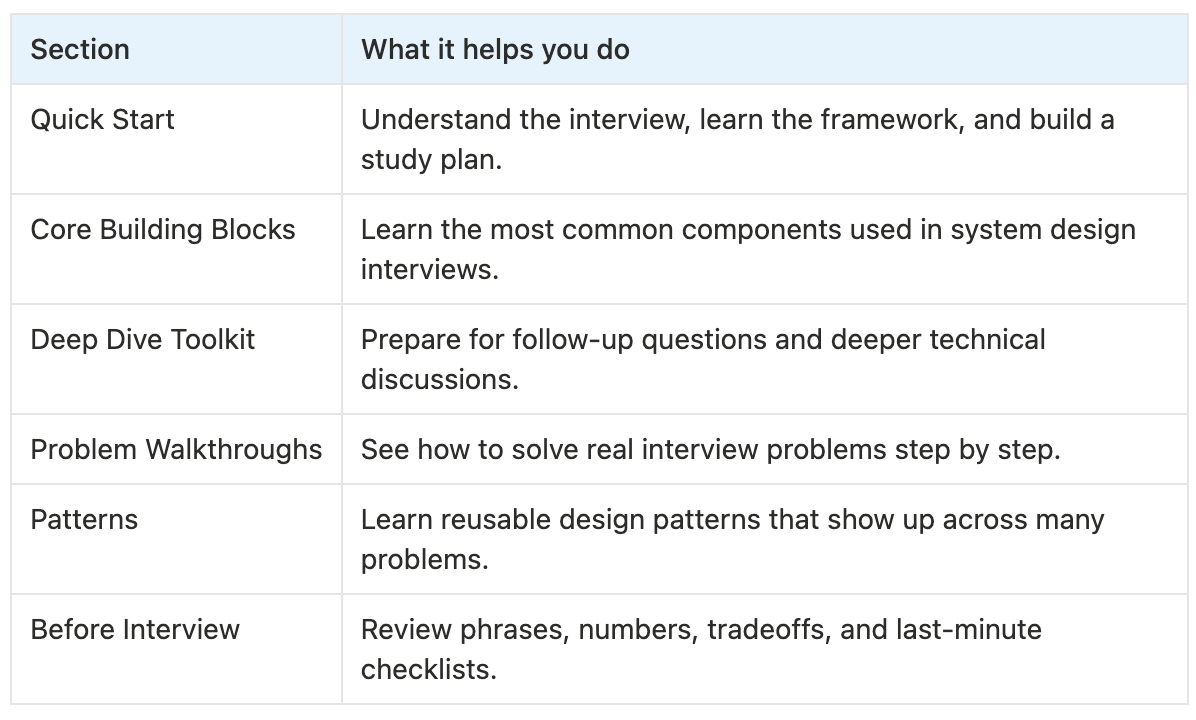
How System Craft is organized
System Craft has six main parts.
The best way to use this guide
If you are new to system design, follow this order:
- Read the Quick Start articles.
- Learn the Core Building Blocks.
- Read 2–3 easy Problem Walkthroughs.
- Learn the Deep Dive Toolkit only when a topic appears in a problem.
- Review Patterns after you have seen several examples.
- Use Before Interview materials in the last few days before your interview.
Do not try to memorize everything before solving problems. That is slow and frustrating.
A better way is:
Framework → Example problem → Building block → Deep dive → More problems → Patterns
This is how real interview skill grows.
How to read a problem walkthrough
For each problem, do not just read the final architecture.
Instead, pay attention to the process:
- What questions should you ask first?
- What requirements matter most?
- What APIs and data models are needed?
- What simple high-level design works first?
- Where does the simple design break?
- What tradeoffs should you explain?
- What would a strong candidate say out loud?
In an interview, the process matters more than the final diagram.
What not to do
Avoid these common mistakes while using this guide:
- Do not copy full answers word for word.
- Do not start every problem by adding cache, queue, and CDN.
- Do not memorize architecture diagrams without understanding the tradeoffs.
- Do not skip the “Common Mistakes” and “Strong Answer” sections.
- Do not spend all your time reading. You must practice speaking.

Final takeaway
System design interviews are not about knowing every technology.
They are about showing that you can:
- understand an open-ended problem,
- make reasonable choices,
- explain tradeoffs,
- and improve a simple design step by step.
Use this guide as a training path, not a textbook.
Want to go beyond reading and actually practice these problems on a whiteboard? System Craft Academy offers a complete System Design interview course built from 150+ real interviews.